Winter Driving Safety Tips: Stay Safe on Snow & Ice
Winter driving safety tips: winter tires, braking distances on ice, how to handle a skid, what to pack in an emergency kit, and how to prepare your car before
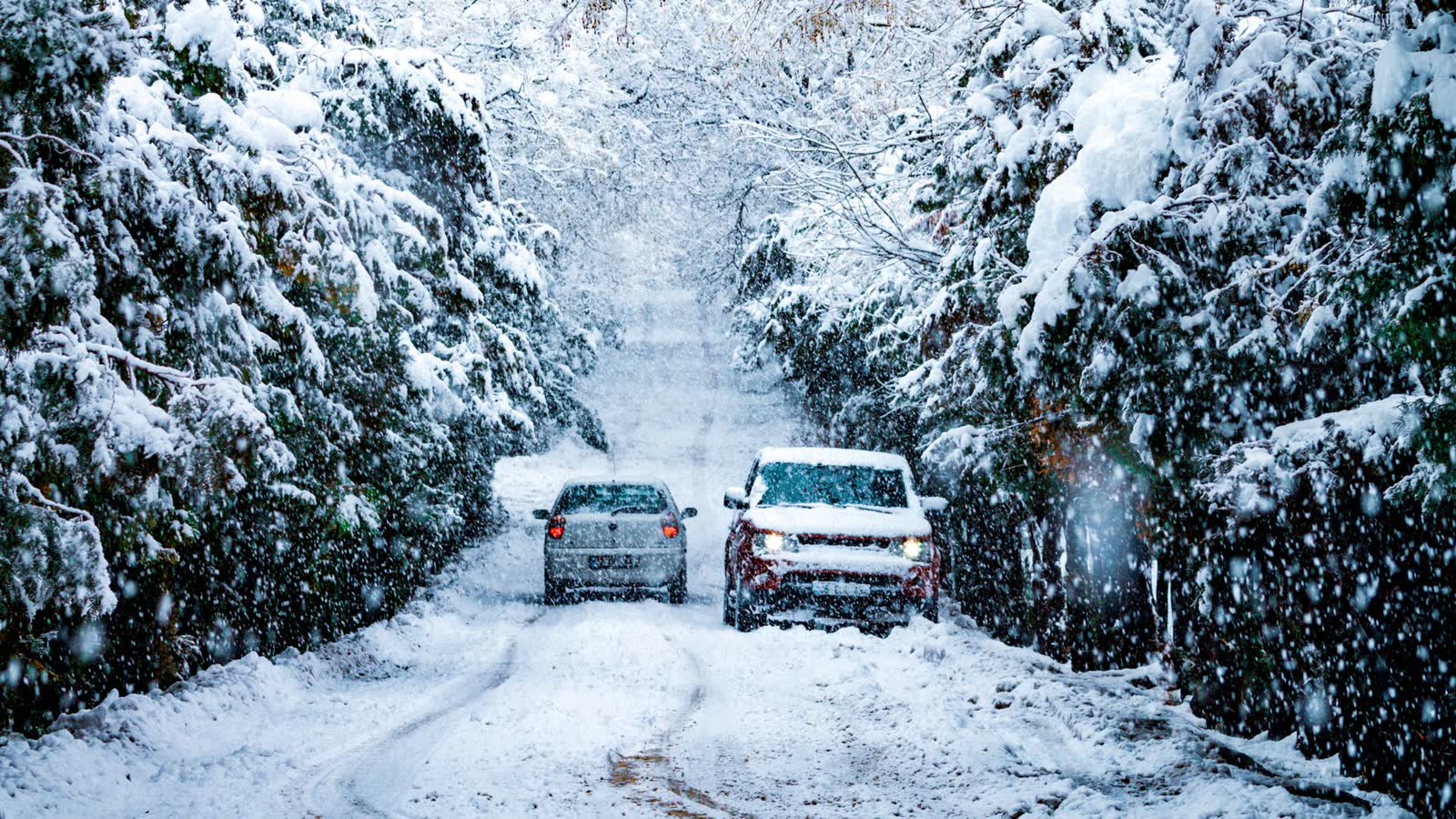
Photo: Pexels
Winter tires: the single best winter investment
Winter tires are the most important winter safety investment you can make — more important than all-wheel drive. A winter tire's rubber compound stays flexible below 45 degrees Fahrenheit, while an all-season tire hardens and loses grip. On ice, a car with winter tires stops about 30 percent shorter than the same car with all-season tires, and that difference can be the difference between a close call and a crash.
All-wheel drive helps you accelerate in snow, but it does nothing to help you stop or turn. A front-wheel-drive car with winter tires will out-brake and out-corner an all-wheel-drive car with all-season tires on ice. If you live where temperatures regularly drop below freezing, winter tires are worth the $600 to $900 for a set, and they last three to four winters if you swap them seasonally.
All-season tires are a compromise, and they are adequate for mild winters with occasional light snow. But if you drive in snow regularly, or if you live in the Snow Belt — the Great Lakes, New England, the Rockies — winter tires are not optional. Studded tires offer even more grip on ice, but they are noisy, they damage roads, and they are restricted or banned in some states. Check your local laws before buying studded tires.
Braking distances on snow and ice
On dry pavement, a car traveling at 30 mph stops in about 45 feet. On snow, the same car needs about 100 feet. On ice, it needs 150 to 200 feet or more — three to four times the dry distance. At 60 mph on ice, the stopping distance can exceed 600 feet, which is two football fields. These numbers are why following distance matters so much in winter: the car ahead of you needs the same distance to stop, and if you are following too closely, you cannot stop in time.
Increase your following distance to 8 to 10 seconds in snow and ice, versus the normal 3 to 4 seconds. Count the seconds between the car ahead passing a fixed point and you passing the same point. If it is less than 8 seconds, slow down and drop back. On a highway in a snowstorm, that means driving 35 to 45 mph in the right lane, not 65 mph in the left lane.
Brake gently and early. Slamming the brakes on ice locks the wheels and sends the car into a skid. Instead, brake smoothly and progressively, and let the anti-lock braking system do its job — if the pedal pulses, that is the ABS working, and you should keep your foot on the brake. In a car without ABS, pump the brakes gently to avoid locking the wheels.
How to handle a skid
If the rear of the car slides out — a fishtail — steer gently in the direction the rear is sliding, which is the same direction you want the car to go. If the rear slides to the right, steer right. Do not overcorrect, and do not slam the brakes. Ease off the accelerator, steer smoothly, and the car will usually straighten out. The key is to stay calm and make small corrections, not large ones.
If the front of the car slides — understeer, where the car goes straight despite the steering wheel being turned — ease off the accelerator and straighten the wheel slightly, then turn again gently once the tires regain grip. Turning the wheel harder only makes it worse, because the tires are already at their grip limit. Patience is the fix: slow down, let the tires grip, and then steer.
Practice in a safe place. An empty parking lot after the first snow is the best classroom for winter driving. Practice braking, turning, and recovering from a skid at low speed, where the consequences are nil. Ten minutes of practice in a parking lot teaches you more about your car's winter behavior than any article can, and it builds the muscle memory that saves you in a real skid.
Prepare your car before winter
Check the battery before the first cold snap. Cold weather reduces a battery's capacity by 30 to 50 percent, and a weak battery that starts the car in October will fail in January. Have the battery tested in the fall, and replace it if it is more than four years old or if the test shows low capacity. A new battery costs $150 to $250, and it is far cheaper than a tow in a snowstorm.
Check the antifreeze, the windshield washer fluid, and the wiper blades. The coolant should be a 50/50 mix of antifreeze and water, which protects to minus 34 degrees Fahrenheit. Switch to winter washer fluid, which contains de-icer and will not freeze on the windshield. Replace the wiper blades if they streak or chatter — winter blades are heavier and work better in snow, and they cost $20 to $40 a pair.
Keep the gas tank at least half full. A full tank prevents condensation from forming inside the tank, which can freeze in the fuel lines, and it gives you enough fuel to run the heater for hours if you are stranded. In a snowstorm, a half tank can be the difference between staying warm and freezing while you wait for help.
What to pack in a winter emergency kit
A winter emergency kit should include a blanket or sleeping bag, a flashlight with extra batteries, a phone charger, a small shovel, a bag of sand or cat litter for traction, an ice scraper, jumper cables, a first-aid kit, water, and non-perishable snacks. The whole kit fits in a small duffel bag in the trunk, and it costs about $50 to $75 to assemble. It is the cheapest peace of mind you can buy. Add a portable tire inflator and a reflective vest — a flat tire in a snowstorm is the one emergency where you may have to work outside the car.
Add a few extras if you drive in remote areas: a candle and matches for warmth, a bright-colored cloth to tie to the antenna as a distress signal, and a spare set of warm clothes, including gloves and a hat. A portable jump starter, which costs $60 to $100, is more reliable than jumper cables, because it does not require another car.
If you are stranded, stay with the car. It is your shelter, and it is far easier for rescuers to find than a person walking in a snowstorm. Run the engine for 10 minutes every hour to stay warm, and crack a window to prevent carbon monoxide buildup. Clear the exhaust pipe of snow before you run the engine, since a blocked exhaust can push carbon monoxide into the cabin.
Driving in a snowstorm: when to stay home
The best winter driving tip is to not drive at all when conditions are dangerous. If the forecast calls for a blizzard, if the roads are closed, or if visibility is under a quarter mile, stay home. No trip is worth your life, and the roads will still be there tomorrow. If you must travel, check the road conditions first, tell someone your route and expected arrival time, and keep your phone charged.
If you are caught in a snowstorm while driving, slow down, turn on your headlights, and increase your following distance. Do not use cruise control on snow or ice — it can cause the car to accelerate unexpectedly when the tires lose grip. If visibility drops to near zero, pull off the road at the next exit or rest area, not on the shoulder, where you can be hit by another car.
Watch for black ice, which forms on bridges, overpasses, and shaded sections of road. Black ice is nearly invisible, and it is most common in the early morning and late evening, when temperatures hover near freezing. If the road looks wet but the temperature is below freezing, assume it is ice, slow down, and avoid sudden steering or braking. Bridges freeze before roads, so slow down before every bridge in winter.
Frequently asked questions
Are winter tires really necessary?
If you live where temperatures regularly drop below freezing, yes. Winter tires stop about 30 percent shorter on ice than all-season tires, and they provide far better grip in snow. All-wheel drive helps you accelerate, but it does nothing to help you stop — only winter tires do that. A set costs $600 to $900 and lasts three to four winters.
How much longer is the stopping distance on ice?
On dry pavement, a car at 30 mph stops in about 45 feet. On snow, it needs about 100 feet. On ice, it needs 150 to 200 feet or more — three to four times the dry distance. Increase your following distance to 8 to 10 seconds in snow and ice, versus 3 to 4 seconds normally.
What should I do if my car starts to skid?
If the rear slides out, steer gently in the direction the rear is sliding and ease off the accelerator. If the front slides, ease off the gas, straighten the wheel slightly, and turn again gently once the tires grip. Do not slam the brakes or overcorrect — small, smooth inputs are the key to recovering from a skid.
Should I use cruise control in snow?
No. Cruise control can cause the car to accelerate unexpectedly when the tires lose grip on snow or ice, which can trigger a skid. Turn off cruise control in snow, ice, rain, and any low-traction condition, and control your speed manually.
What should I keep in a winter emergency kit?
A blanket, flashlight, phone charger, small shovel, bag of sand or cat litter for traction, ice scraper, jumper cables, first-aid kit, water, and snacks. Add a candle, warm clothes, and a portable jump starter if you drive in remote areas. The kit costs about $50 to $75 and fits in a small duffel bag.
When should I not drive in winter?
Stay home during a blizzard, when roads are closed, or when visibility is under a quarter mile. If you must travel, check road conditions first, tell someone your route, and keep your phone charged. If visibility drops to near zero while driving, pull off at the next exit — not on the shoulder.
Car prices and estimates on this page change often and are based on public information available in November 2026. Always verify the price, features and availability with a dealer before you buy. This article is for general information only and is not financial advice. Read the full Disclaimer.