How to Change a Flat Tire (Step-by-Step Guide)
How to change a flat tire safely: the tools you need, jack placement, lug nut torque, and what to do if you have no spare — a step-by-step guide every driver
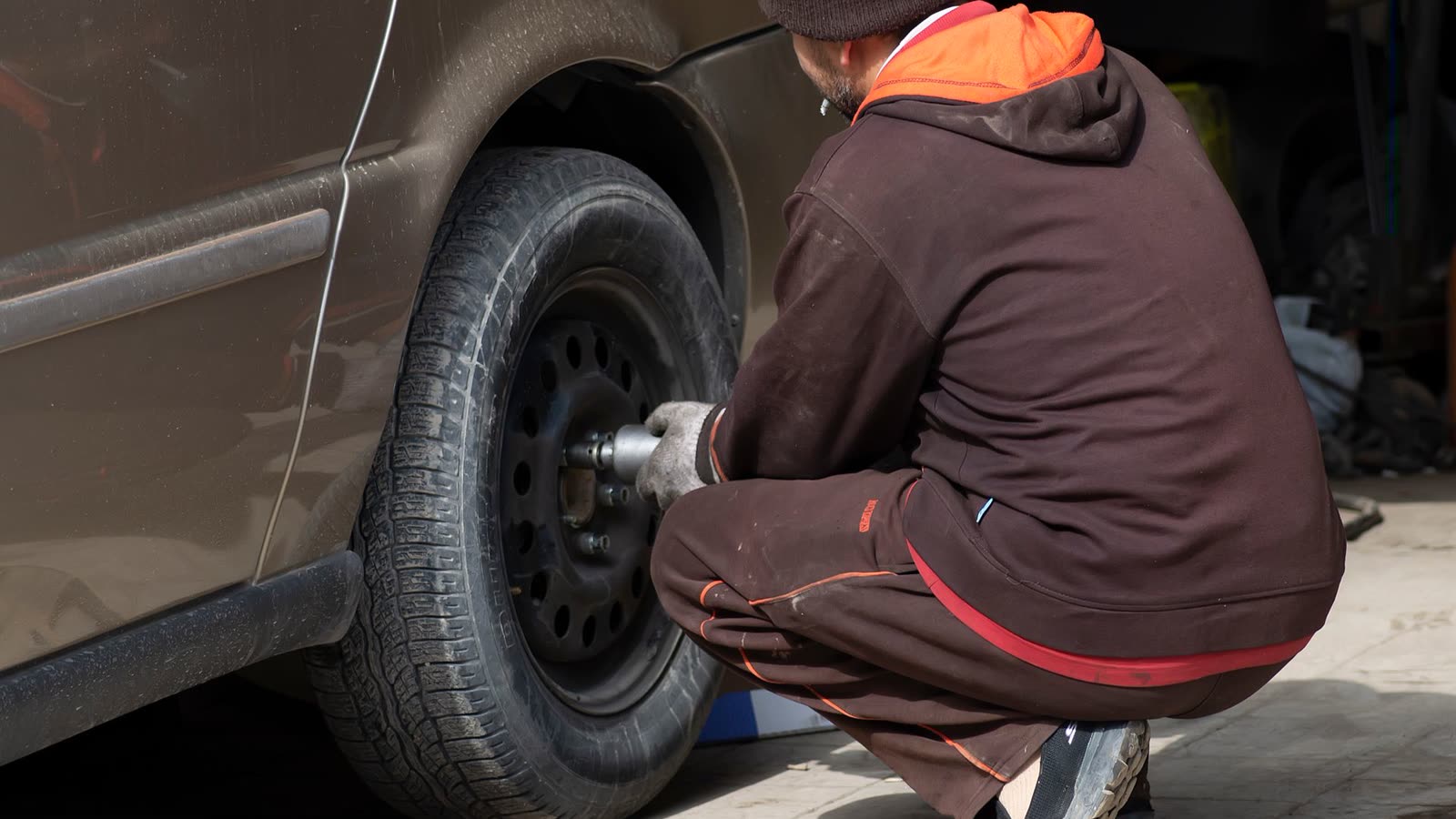
Photo: Pexels
What you need, and where it is
Every car comes with a spare tire, a jack, and a lug wrench, usually stored under the trunk floor or beneath the rear of the car. Before you ever need them, find them. Open the trunk, lift the floor panel, and identify the spare, the jack, and the wrench. If your car has a tire repair kit instead of a spare — common on many new cars — find the kit and read the instructions. Knowing where the tools are before an emergency is half the job.
You should also carry a few extras: a flashlight, gloves, a reflective vest or triangles, and a tire pressure gauge. A portable tire inflator, which costs $30 to $50 and plugs into the car's 12-volt outlet, can reinflate a slow leak enough to drive to a shop. A can of tire sealant can temporarily seal a small puncture, though it makes the tire unrepairable afterward and should only be used in an emergency.
Check your spare tire's pressure every six months. A spare that has sat in the trunk for years is often flat, and a flat spare is useless. The pressure is printed on the tire's sidewall, usually 60 psi for a compact temporary spare. A full-size spare should be inflated to the same pressure as the other tires.
Step 1: get to safety and prepare the car
If you get a flat while driving, do not slam the brakes. Ease off the accelerator, turn on the hazard lights, and steer gently to a safe, flat, level spot — a parking lot, a wide shoulder, or a side street. Avoid stopping on a slope, on soft ground, or on a narrow shoulder next to fast traffic. If you are on a highway, drive slowly to the next exit if the tire will allow it; a flat tire can be driven for a short distance at low speed without destroying the wheel.
Once stopped, turn on the hazard lights, apply the parking brake, and put the car in Park (or first gear for a manual). Place reflective triangles or flares 50 to 100 feet behind the car if you have them, and wear a reflective vest if you have one. If it is dark, turn on the interior light and use a flashlight. Your safety matters more than the tire — if you do not feel safe, call roadside assistance and wait in the car.
Remove the spare, the jack, and the lug wrench from the trunk. If the car has wheel locks — special lug nuts that require a key — find the key, which is usually in the glovebox or with the jack. Without the key, you cannot remove the wheel, and you will need roadside assistance.
Step 2: loosen the lug nuts, then jack up the car
Before you jack up the car, loosen the lug nuts on the flat tire while it is still on the ground. Fit the lug wrench onto a nut and turn counterclockwise. The nuts may be very tight — stand on the wrench or use your body weight if needed, but be careful not to slip. Loosen each nut about a quarter turn, just enough to break it free. Do not remove the nuts yet.
Find the jack point. Your owner's manual shows the correct jacking point for each wheel — usually a reinforced notch on the frame rail just behind the front wheel or just ahead of the rear wheel. Placing the jack in the wrong spot can damage the car or cause the jack to slip. Never place the jack under the engine, the transmission, or a suspension component.
Raise the car with the jack until the flat tire is about 6 inches off the ground. The car should be stable — if it rocks or the jack leans, lower it and reposition. Never put any part of your body under a car supported only by a jack. The jack is for changing the tire, not for working underneath the car.
Step 3: remove the flat, install the spare
Remove the lug nuts completely and put them in a safe place — a pocket or the hubcap — so they do not roll away. Pull the flat tire straight toward you and set it on the ground. It is heavy, about 40 to 50 pounds, so lift with your legs, not your back. If the wheel is stuck to the hub, kick the tire firmly on the side to break it free. While the wheel is off, glance at the brake pads — if they look thinner than a pencil eraser, get them checked soon.
Lift the spare onto the hub, aligning the holes with the wheel studs. The spare is lighter than the full-size tire, but it is still heavy — lift carefully. Thread the lug nuts on by hand, turning clockwise, and tighten them finger-tight. Do not use the wrench yet; hand-tightening ensures the nuts are threaded correctly and not cross-threaded.
Lower the car partially with the jack, until the spare tire just touches the ground but the car's full weight is not yet on it. Now tighten the lug nuts with the wrench in a star pattern — tighten one nut, then the nut opposite it, then the next, and so on. The star pattern ensures the wheel sits evenly on the hub. Tighten each nut firmly, but do not over-tighten.
Step 4: lower the car, torque the nuts, and drive to a shop
Lower the car completely and remove the jack. Now tighten the lug nuts again, in the same star pattern, with as much force as you can apply with the wrench. The correct torque is typically 80 to 100 foot-pounds, which is about as tight as you can get with a standard lug wrench and your body weight. If you have a torque wrench, use it — the specification is in your owner's manual.
Put the flat tire, the jack, and the wrench back in the trunk. Check the spare's pressure with a gauge if you have one — a compact temporary spare is usually inflated to 60 psi, and it is often low after sitting in the trunk. If you have a portable inflator, top it up. If not, drive to the nearest gas station and check the pressure there.
A compact temporary spare, often called a donut, is rated for a maximum of 50 mph and 50 to 70 miles. Drive slowly, avoid highways if possible, and go directly to a tire shop. A full-size spare can be driven normally, but you should still have the flat repaired or replaced as soon as possible. Have the lug nuts re-torqued after 50 miles of driving, since they can loosen as the wheel settles.
What if you have no spare, or the tire cannot be changed
Many new cars do not come with a spare tire. Instead, they have a tire repair kit with sealant and a compressor, or run-flat tires that can be driven for 50 miles after a puncture. If your car has a repair kit, follow the instructions: connect the sealant to the tire valve, run the compressor, and drive slowly to a shop. The sealant is a temporary fix, and the tire must be replaced, not repaired, afterward.
Run-flat tires can be driven for up to 50 miles at 50 mph after losing pressure, which is usually enough to reach a shop. Do not drive further than the manufacturer's limit, and do not exceed 50 mph — the tire's sidewall is supporting the car's weight, and it will fail if pushed too far. Check your manual for the exact limits of your run-flat tires.
If you cannot change the tire, or if you do not feel safe doing so, call roadside assistance. Most car insurance policies include roadside assistance, and many car manufacturers offer it free for the first few years. A tow truck can change the tire or tow the car to a shop, and it costs $75 to $150 without coverage. There is no shame in calling for help — your safety is worth more than your pride.
Frequently asked questions
How long does it take to change a flat tire?
About 20 to 30 minutes for a first-timer, and 10 to 15 minutes with practice. The hardest part is usually loosening the lug nuts, which can be very tight. Take your time, follow the steps, and do not rush — a careful tire change is a safe tire change.
How fast can I drive on a spare tire?
A compact temporary spare (donut) is rated for a maximum of 50 mph and 50 to 70 miles. Drive slowly, avoid highways if possible, and go directly to a tire shop. A full-size spare can be driven normally, but have the flat repaired or replaced as soon as possible.
Where is the jack point on my car?
Your owner's manual shows the correct jacking point for each wheel — usually a reinforced notch on the frame rail just behind the front wheel or just ahead of the rear wheel. Never place the jack under the engine, the transmission, or a suspension component, as it can damage the car or slip.
How tight should lug nuts be?
The correct torque is typically 80 to 100 foot-pounds, which is about as tight as you can get with a standard lug wrench and your body weight. Tighten in a star pattern, and have the lug nuts re-torqued after 50 miles of driving, since they can loosen as the wheel settles.
What if my car does not have a spare tire?
Many new cars come with a tire repair kit (sealant and compressor) or run-flat tires instead of a spare. Follow the kit's instructions for a temporary repair, or drive up to 50 miles at 50 mph on run-flat tires to reach a shop. If neither works, call roadside assistance.
Should I call roadside assistance instead of changing the tire myself?
If you do not feel safe — on a narrow highway shoulder, in bad weather, at night, or on a slope — call roadside assistance and wait in the car. Your safety matters more than the tire. Most insurance policies include roadside assistance, and a tow costs $75 to $150 without coverage.
Car prices and estimates on this page change often and are based on public information available in November 2026. Always verify the price, features and availability with a dealer before you buy. This article is for general information only and is not financial advice. Read the full Disclaimer.