2026 Toyota Camry Review: The Hybrid Sedan to Beat
2026 Toyota Camry review: the hybrid-only sedan delivers 47 mpg, a quiet cabin, and Toyota reliability from $29,000. We test the LE, SE, XLE, and XSE trims
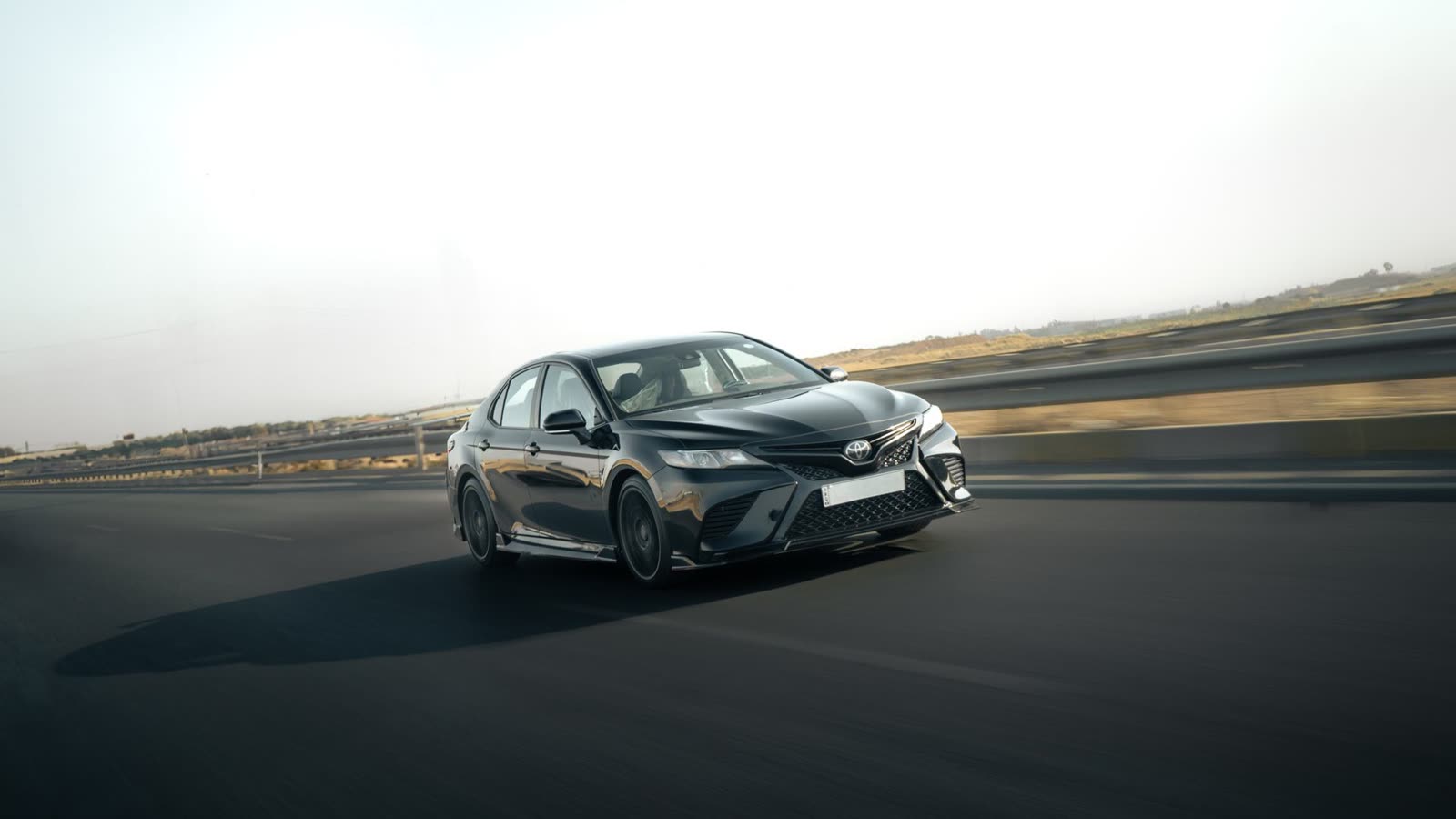
Photo: Pexels
The 2026 Camry: hybrid-only, and better for it
The 2026 Toyota Camry is hybrid-only, and that is the best thing that has happened to America's best-selling sedan. Every Camry now uses a 2.5-liter four-cylinder hybrid powertrain making 225 horsepower with front-wheel drive or 232 horsepower with all-wheel drive, and every version delivers 47 mpg combined — 51 mpg in the LE trim. That is better fuel economy than most compact cars, in a comfortable midsize sedan that starts at about $29,000.
The hybrid system is seamless. The engine and electric motor work together without any of the hesitation or noise that plagued early hybrids, and the Camry accelerates from 0 to 60 mph in about 7.2 seconds — quick enough for any merge or pass. The continuously variable transmission is tuned to feel like a conventional automatic, and the car is quiet at highway speed, with only a faint engine note under hard acceleration.
The Camry's transformation is complete: it is no longer the boring car your parents drove. The 2026 model has sharp styling, a modern interior, and a hybrid powertrain that makes it the most fuel-efficient midsize sedan you can buy. It is the default choice in its class for a reason.
Trims and pricing: SE is the sweet spot
The Camry LE starts at about $29,000 and includes Toyota Safety Sense 3.0, a 7-inch touchscreen, wireless Apple CarPlay and Android Auto, and 51 mpg combined — the best fuel economy in the lineup. The LE is the value pick, and it is genuinely well-equipped for a base trim.
The SE, at about $31,000, is the trim most buyers should choose. It adds sport-tuned suspension, 18-inch wheels, a larger 12.3-inch touchscreen, a leather-wrapped steering wheel, and sport seats with more bolstering. The SE also looks sharper, with a black grille and a rear spoiler. The $2,000 premium over the LE is worth it for the larger screen and the sportier feel.
The XLE, at about $34,000, adds leather seats, heated front seats, a power moonroof, and ambient lighting. The XSE, at about $36,000, combines the SE's sport styling with the XLE's luxury features, plus 19-inch wheels and a sport-tuned suspension. All-wheel drive adds about $1,500 to any trim and is worth it in snowy states.
Interior, comfort, and technology
The Camry's cabin is a major step up from the previous generation. The dashboard is clean and modern, with a 12.3-inch touchscreen on all but the base trim, physical climate controls, and a digital instrument cluster. Materials are good for the class, with soft-touch surfaces on the dashboard and doors, though hard plastics remain on the lower door panels.
Rear-seat space is generous, with 38 inches of legroom — enough for two adults to sit comfortably on a long drive. The trunk holds 15.1 cubic feet, which is average for the class, and the rear seats fold in a 60/40 split for longer items. The Camry's cabin is quiet at highway speed, measuring about 66 decibels at 70 mph, which is better than the Honda Accord.
Toyota's infotainment system is a strength: the touchscreen is responsive, the menus are logical, and wireless Apple CarPlay and Android Auto work reliably. The voice assistant understands natural commands, and over-the-air updates keep the system current. The JBL premium audio system, available on the XLE and XSE, is a worthwhile upgrade for music lovers.
Driving the Camry: comfortable, not exciting
The Camry is a comfortable, competent car, and it makes no pretense of being a sports sedan. The ride is smooth and composed, absorbing broken pavement without drama, and the steering is light and accurate. The SE and XSE trims have a firmer suspension that reduces body roll, but the Camry will never thrill you on a winding road — and it does not try to.
The hybrid powertrain is the star. It delivers instant torque from the electric motor, making the Camry feel quicker around town than its 7.2-second 0-to-60 time suggests. Fuel economy is outstanding: we observed 46 mpg in mixed driving, and 51 mpg is achievable in gentle city driving. Over 15,000 miles a year, the Camry costs about $1,100 in fuel at $3.50 a gallon — half the cost of a comparable V6 sedan.
All-wheel drive is available for the first time on every trim, and it adds confidence in rain and snow without hurting fuel economy much — the AWD Camry still delivers 44 mpg combined. The Camry's brakes are strong and linear, and the car feels stable and secure at highway speed. It is not exciting, but it is deeply competent.
Safety, reliability, and running costs
The Camry earns an IIHS Top Safety Pick+ rating and a five-star overall rating from the NHTSA. Toyota Safety Sense 3.0 is standard on every trim, including adaptive cruise control, lane-keeping assist, automatic emergency braking, blind-spot monitoring, and rear cross-traffic alert. The Camry's safety suite is among the best in the class, and it works smoothly in real-world driving.
Reliability is the Camry's superpower. Toyota's hybrid system has been refined over 25 years, and Camrys routinely pass 200,000 miles with basic maintenance. The hybrid battery is warrantied for 10 years or 150,000 miles, and replacement costs have fallen to about $2,000 to $3,000 if it is ever needed — which is rare.
Running costs are low. Insurance for a Camry runs about $130 to $160 a month for a typical driver, maintenance costs about $400 a year, and the 47-mpg fuel economy keeps gas bills minimal. Resale value is excellent: a five-year-old Camry retains about 60 percent of its value, among the best in the class.
Verdict: the best midsize sedan you can buy
The 2026 Toyota Camry is the best midsize sedan in 2026, and it is not close. The hybrid-only powertrain delivers 47 mpg, the cabin is quiet and comfortable, the safety ratings are top-tier, and Toyota's reliability record is unmatched. The Camry does everything a family sedan should do, and it does it for about $29,000.
The Honda Accord is the closest rival, with a more engaging drive and a roomier interior, but it costs more and gets worse fuel economy in non-hybrid form. Independent car reviews consistently rank the Camry at or near the top of the midsize sedan class for reliability, fuel economy, and resale value. The Hyundai Sonata Hybrid matches the Camry's fuel economy and offers more style, but its resale value trails Toyota's. The Camry's combination of efficiency, reliability, and value is unmatched.
Buy the SE trim at about $31,000 for the best balance of features and value, or the LE at about $29,000 if you want the lowest price and the best fuel economy. Add all-wheel drive if you live where it snows. The Camry is not the most exciting car you can buy, but it is the smartest — and for most buyers, that is what matters.
Frequently asked questions
How much does a 2026 Toyota Camry cost?
The 2026 Toyota Camry starts at about $29,000 for the LE trim. The SE is about $31,000, the XLE is about $34,000, and the XSE is about $36,000. All-wheel drive adds about $1,500 to any trim. All Camrys are hybrids in 2026.
What is the fuel economy of the 2026 Toyota Camry?
The 2026 Camry delivers 47 mpg combined in most trims, and 51 mpg combined in the LE. All-wheel-drive models get 44 mpg combined. In real-world mixed driving, expect 44 to 48 mpg, which is the best fuel economy of any midsize gas sedan.
Is the 2026 Camry reliable?
Yes. The Camry has one of the best reliability records in the industry, and Toyota's hybrid system has been refined over 25 years. Camrys routinely pass 200,000 miles with basic maintenance, and the hybrid battery is warrantied for 10 years or 150,000 miles.
Is the Camry hybrid-only in 2026?
Yes. Every 2026 Camry uses a 2.5-liter four-cylinder hybrid powertrain making 225 horsepower with front-wheel drive or 232 horsepower with all-wheel drive. There is no gas-only Camry for 2026, and the hybrid delivers better performance and fuel economy than the old V6.
How does the Camry compare to the Honda Accord?
The Camry wins on fuel economy (47 mpg versus 33 mpg for the gas Accord, 48 mpg for the Accord Hybrid) and reliability, while the Accord has a roomier interior and a more engaging drive. The Accord Hybrid starts near $34,000, about $5,000 more than the base Camry. For most buyers, the Camry is the better value.
Which Camry trim is the best value?
The SE at about $31,000 is the best value, with a larger 12.3-inch touchscreen, sport-tuned suspension, 18-inch wheels, and sport seats. The LE at about $29,000 is the cheapest and most fuel-efficient, at 51 mpg combined. The XSE at about $36,000 is the pick if you want luxury features with sport styling.
Car prices and estimates on this page change often and are based on public information available in November 2026. Always verify the price, features and availability with a dealer before you buy. This article is for general information only and is not financial advice. Read the full Disclaimer.