EV Charging at Home: The Complete Guide
EV charging at home explained: Level 1 vs Level 2, installation costs, how long charging takes, electrician tips, and how much home charging really costs per
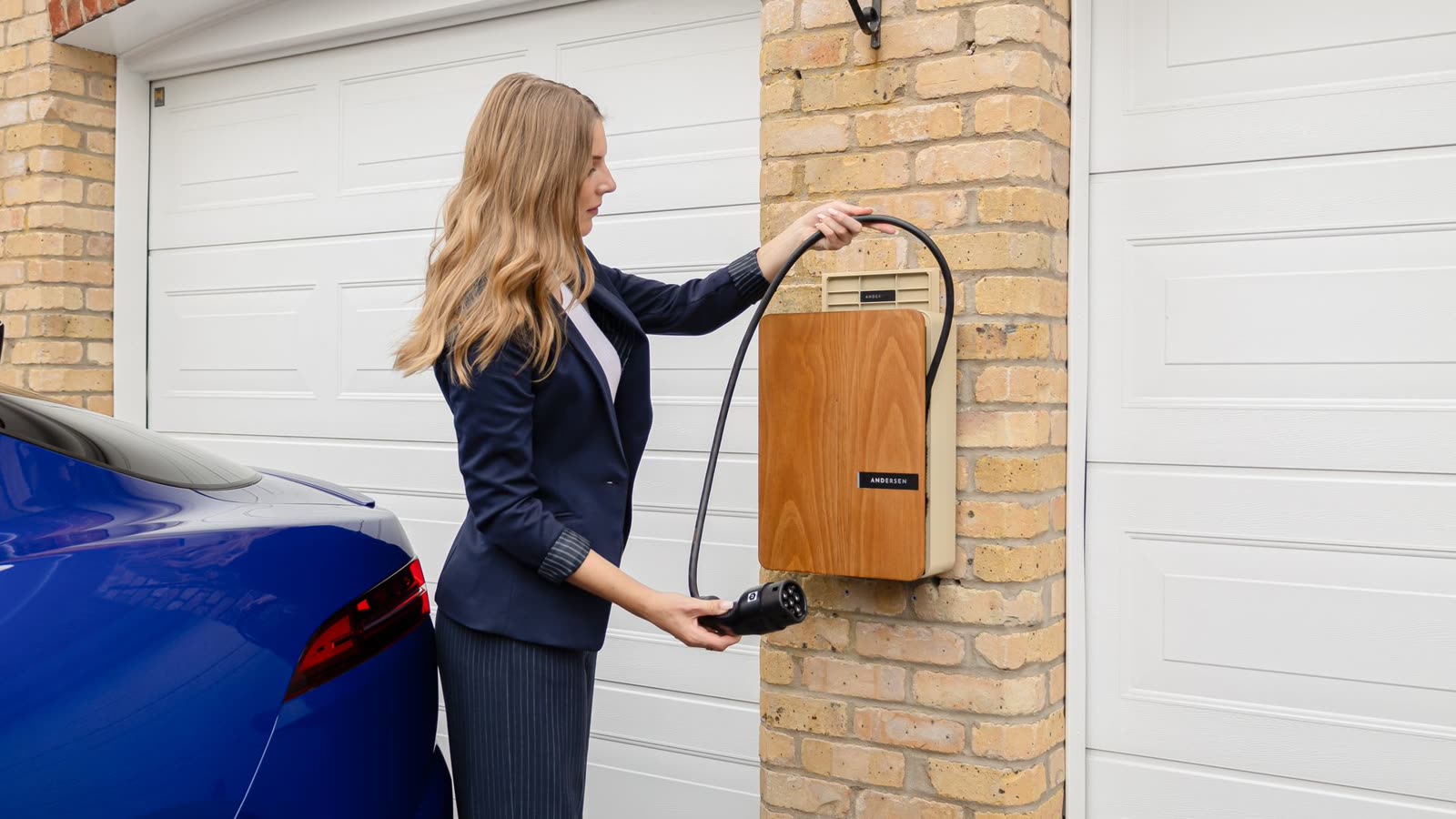
Photo: Pexels
Level 1 vs Level 2: what is the difference
Level 1 charging uses a standard 120-volt household outlet — the same kind you plug a lamp into. It adds about 3 to 5 miles of range per hour, which means a full charge from empty can take 24 to 40 hours. That sounds useless, but for a driver who covers 30 miles a day and plugs in every night, Level 1 can actually keep up, adding about 40 miles overnight.
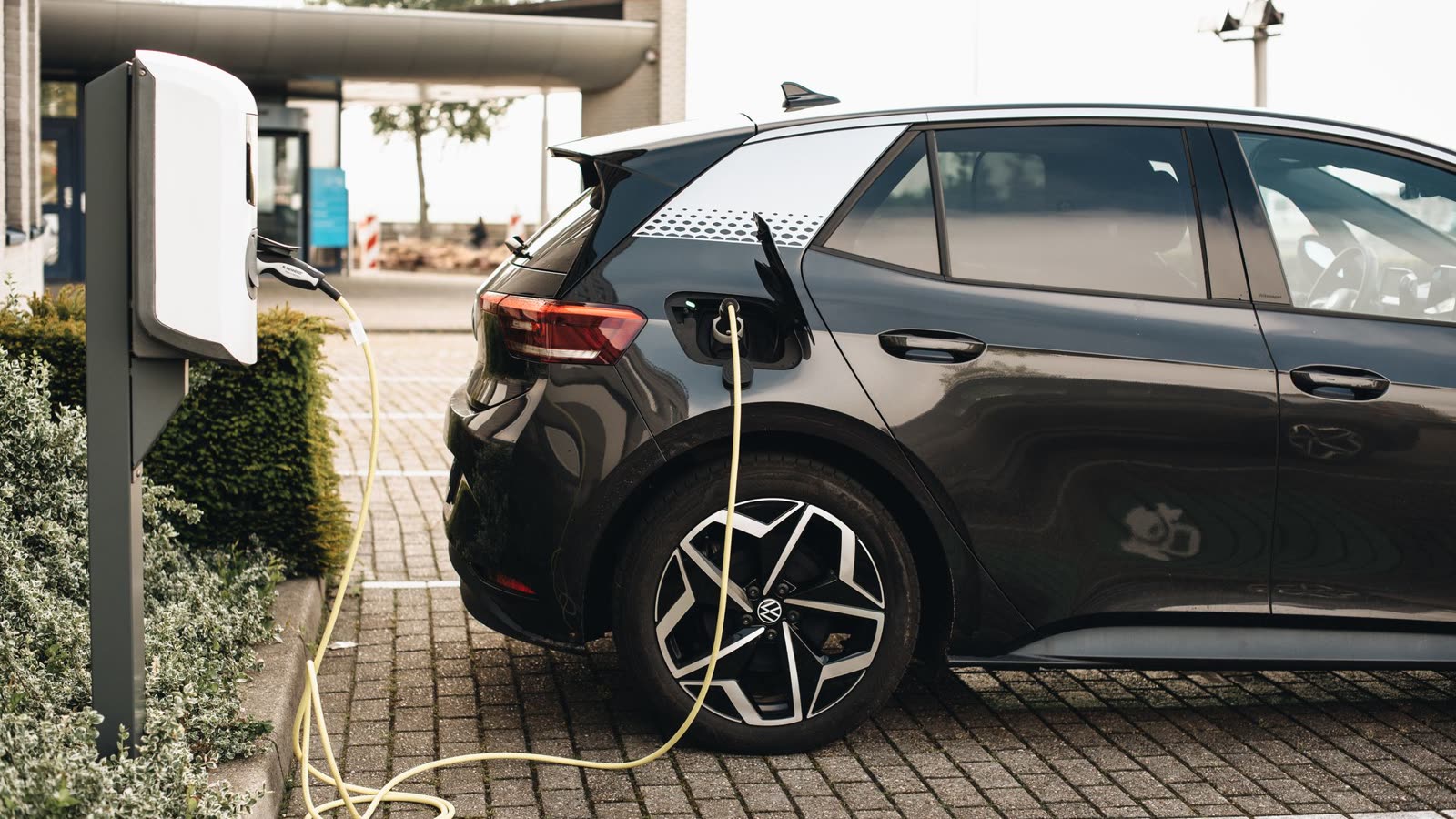
Level 2 charging uses a 240-volt circuit, like an electric dryer or oven, and adds 25 to 40 miles of range per hour depending on the charger and the car. A typical EV with a 75-kWh battery charges from empty to full in 6 to 9 hours overnight. For most owners, Level 2 is the right answer: you plug in when you get home and wake up to a full battery every morning.
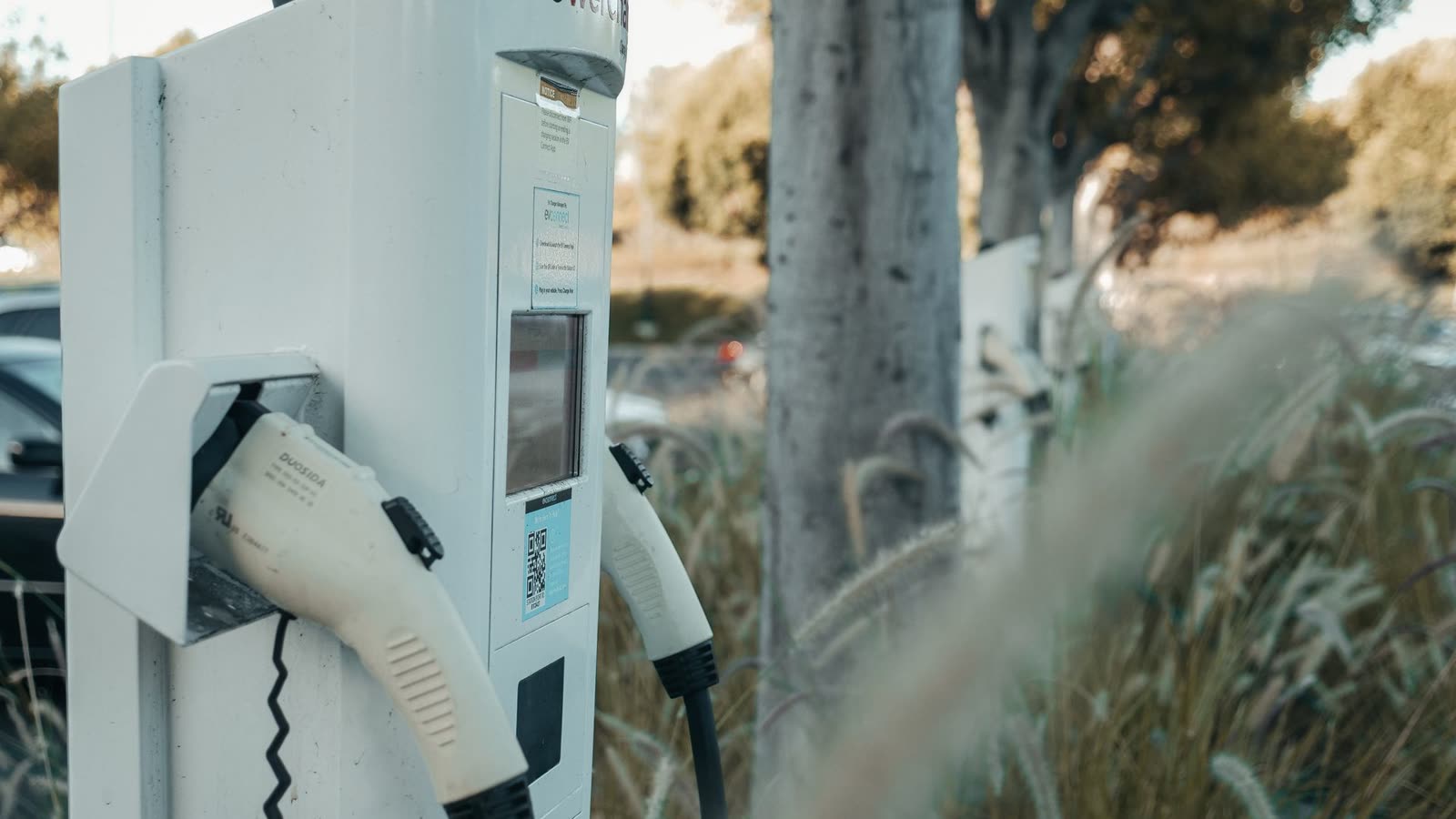
The third option, DC fast charging, is for road trips, not home use. A home DC fast charger costs $10,000 or more plus major electrical work, and frequent fast charging wears the battery faster. Public fast chargers add 100 miles in 10 to 20 minutes, but they cost two to three times more per kWh than home charging.
What a Level 2 charger costs to install
A good Level 2 home charger costs $400 to $700 for the unit itself. Popular models include the ChargePoint Home Flex, the Grizzl-E Classic, and the Tesla Wall Connector, all of which deliver 40 to 48 amps. Many EV manufacturers include a portable Level 2 charger with the car, which can save you the hardware cost entirely.
Installation is the bigger expense. If your electrical panel is in or near the garage and has spare capacity, an electrician can install a 240-volt outlet or hardwire a charger for $500 to $1,000. If the panel is far from the garage, full, or old, the job can run $1,500 to $3,000, and a panel upgrade adds another $1,500 to $3,000.
Check for rebates before you pay. Many utilities offer $250 to $1,000 back on a charger or installation, and some states add their own incentives. The federal tax credit for home charging equipment covers 30 percent of the cost up to $1,000 in eligible areas. Your utility's website is the first place to check, and some utilities will even install the charger for a flat fee.
How long does home charging actually take
Charging time depends on three things: your battery size, your charger's power, and how empty the battery is. A Tesla Model 3 with a 75-kWh battery on a 48-amp Level 2 charger goes from 20 to 80 percent in about 4 to 5 hours. A Chevrolet Equinox EV with a larger 85-kWh battery takes about 5 to 6 hours for the same charge.
Most owners rarely charge from empty. If you drive 40 miles a day and your car uses about 0.3 kWh per mile, you use 12 kWh — and a Level 2 charger replaces that in under two hours. The practical result is that charging time almost never matters at home, because the car sits parked for 10 to 12 hours overnight anyway.
Cold weather slows charging. Below freezing, the battery must warm up before it accepts full power, and charging can take 30 to 50 percent longer. If you park in a garage, even an unheated one, charging is noticeably faster than outdoors. Some EVs let you schedule a departure time so the car pre-conditions the battery while still plugged in, which helps both range and charging speed.
What your electrician needs to know
Before the electrician arrives, find out your panel's capacity. Most modern homes have a 200-amp service, which is plenty for a 40- or 48-amp charger. Older homes with 100-amp service may need a load calculation to confirm the charger will not overload the panel, especially if you also have electric heat, a hot tub, or an electric water heater.
Decide between a plug-in charger on a NEMA 14-50 outlet and a hardwired unit. A plug-in charger is easier to replace and take with you if you move, while a hardwired charger can deliver more power — up to 48 amps versus 40 amps on a plug — and looks cleaner on the wall. Hardwired is the better choice if you plan to stay in the home.
Get two or three quotes and ask each electrician the same questions: Do they have experience with EV chargers? Will they pull the permit? Is the quote for a dedicated circuit with the correct wire gauge? A proper installation uses a dedicated circuit with no other loads, and the permit and inspection protect you if anything goes wrong later.
How much does home charging cost per month
The math is simple: multiply your car's energy use by your electricity rate. An EV that uses 0.3 kWh per mile driven 1,000 miles a month consumes 300 kWh. At the national average residential rate of about $0.16 per kWh, that is $48 a month. The same driving in a 30-mpg gas car at $3.50 a gallon costs about $117 a month.
Time-of-use rates can cut that further. Many utilities charge as little as $0.08 to $0.10 per kWh overnight and $0.25 or more during evening peak hours. Scheduling your car to charge after 11 p.m. can cut your charging bill nearly in half. Most EVs and chargers let you set a charging schedule in the app, so this costs you nothing but a few minutes of setup.
Apartment dwellers and renters have fewer options, but they are improving. Ask your landlord about installing a charger — some will split the cost because it raises the property's value. If home charging is impossible, look for workplace charging or a nearby Level 2 charger at a grocery store or gym, where you can add 100 miles during a normal errand.
Smart charging tips and common mistakes
Set your daily charge limit to 80 percent. Lithium-ion batteries last longest when they spend most of their life between 20 and 80 percent charge, and most manufacturers recommend 80 percent for daily use. Charge to 100 percent only before a long trip. This one habit can add years to your battery's useful life.
Do not buy more charger than you need. A 48-amp charger is nice, but a 32-amp unit adds about 25 miles per hour and is enough for any overnight charging scenario. Spend the savings on a better cable length or a smart charger that tracks your energy use and works with your utility's time-of-use rates.
The most common mistake is skipping the permit. An unpermitted installation can void your home insurance coverage if there is a fire, and it creates problems when you sell the house. A permitted, inspected installation costs a little more and takes a little longer, but it is the only installation worth having.
Frequently asked questions
Do I need a Level 2 charger at home?
Most EV owners should get one. Level 1 charging adds only 3 to 5 miles per hour, which works for drivers under 30 miles a day but feels limiting otherwise. A Level 2 charger adds 25 to 40 miles per hour and costs $500 to $2,000 installed, and it is what makes EV ownership genuinely convenient.
How much does it cost to install a home EV charger?
A charger costs $400 to $700, and installation runs $500 to $1,000 if your panel is nearby and has capacity. If the panel needs upgrading or the garage is far from it, the total can reach $2,000 to $3,000. Utility rebates of $250 to $1,000 are common and can cut the cost significantly.
Can I charge an EV from a regular outlet?
Yes. Every EV comes with a Level 1 charging cable that plugs into a standard 120-volt outlet. It adds about 3 to 5 miles of range per hour, so it works for low-mileage drivers, but most owners upgrade to Level 2 within the first year for the faster charging and convenience.
How much will home charging add to my electric bill?
Driving 1,000 miles a month in an EV that uses 0.3 kWh per mile adds about 300 kWh to your bill, or roughly $48 a month at $0.16 per kWh. Charging overnight on a time-of-use rate can cut that to $25 to $30. That compares with about $117 a month in gas for a 30-mpg car.
Is it bad to charge my EV to 100 percent?
For daily driving, yes — keep the charge between 20 and 80 percent to maximize battery life. Charge to 100 percent only before a long trip, and try to start driving soon after it finishes. Most EVs let you set an 80 percent daily limit in the car's settings or app.
Can renters install a home EV charger?
Often yes, with the landlord's permission. Some landlords will split the cost or allow a simple NEMA 14-50 outlet installation. If that is not possible, look for workplace charging, public Level 2 chargers near home, or a nearby fast charger for a weekly top-up.
Car prices and estimates on this page change often and are based on public information available in November 2026. Always verify the price, features and availability with a dealer before you buy. This article is for general information only and is not financial advice. Read the full Disclaimer.